
|
Black
Hills Angus |
|
Cattle Care: Rotational grazing, free choice minerals & fresh water, no confinement
During the winter months, we feed large round bales of haylage. Having been in the dairy business for so many years, I learned a lot about producing high quality feed. The saying "We are what we eat", applies to our cattle here at Black Hills Angus. We purchase all of our winter hay from local farms who have extra feed to sell. I want our cattle to get the best feed available so I don't look for "beef hay or heifer hay"; I look for early cut dairy feed. By purchasing all of our hay from various local producers, I don't risk having to feed poor quality hay. In October, we round up the herd and fence line wean the calves. The calves are kept in a corral with their mothers on the other side of the fence for three days. The cows then go to their winter paddocks down over the hill in a sheltered area with tree and boulder windbreaks. They have fresh clean water and hay available 24/7. The calves are released to the pastures around the house so we can keep a close eye on their health and progress. These pastures also provide shelter and fresh water all winter long. From weaning on the calves get a little grain daily along with the very best hay we can find. They do not receive growth hormone implants or animal byproducts. These animals' diet is primarily grass, with a small amount of grain, for extra energy in the winter and marbling in the meat. Our belief is this gives our meat that extra flavor. In the spring, they return to rotational grazing until October. |
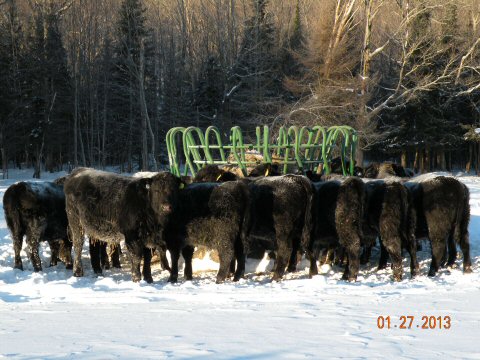 The cattle here at Black Hills Angus are never kept in confinement, on concrete floors, or in feedlots, they spend their entire lives outdoors. In the summer months they freely roam pastures of succulent grasses and clovers. We do rotational grazing here so they move into a new lush paddock every couple of days. They have free choice access to mineral blocks and fresh clean water. The animals produce the most natural fertilizer, and the only fertilizer, used on their pastures. Every time we move them to a new paddock, we chain harrow the pasture to break up and spread the manure so it can better feed the soil.